

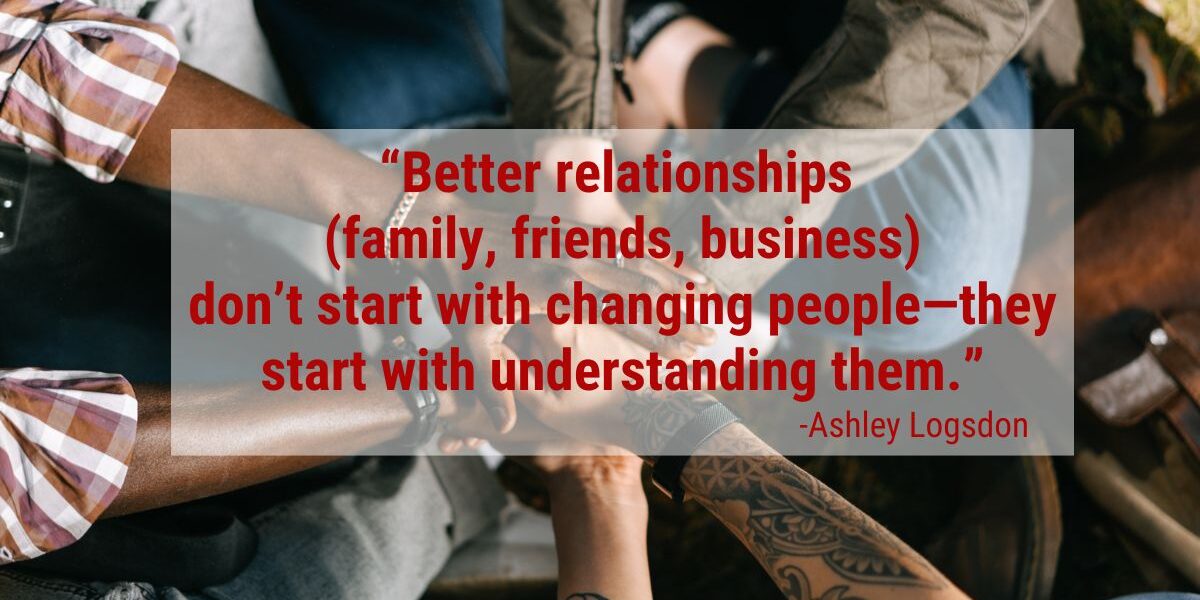
Have you ever struggled to connect with someone who just seems to operate on a completely different wavelength than you?
Maybe you can’t quite figure out why they’re reacting the way they are—or why they seem resistant to your ideas. If you’ve experienced this, you’re not alone. Time and time again, I’ve seen these gaps in communication create unnecessary frustration, misunderstandings, and even damaged relationships.
Understanding DISC communication styles helps explain why people communicate differently—and how empathy can bridge those gaps at work, in leadership, and in everyday relationships.
“Isn’t DISC Just Another Personality Test?”
I know what you might be thinking: Personality tests are just a bunch of hooey, right?
But hear me out.
DISC is different from many personality tests because it doesn’t try to box you into a single label. Instead, it looks at four aspects of behavior:
- Driven (D)
- Inspiring (I)
- Supportive (S)
- Curious (C)
Rather than saying you are one thing, DISC recognizes that you are capable of being many things. Some behaviors simply come more naturally than others. When you understand your natural strengths—and stay closer to your “sweet spot”—you often feel more energized, effective, and confident.
Even more importantly, DISC gives you tools to understand others.
DISC Communication Styles as a Language of Empathy
I first heard DISC described as a language of empathy from my friend Jen McDonough, and it stuck with me immediately.
She shared:
“In my own speaking business, using DISC has been such a valuable tool in understanding the best way to market to my ideal audience, how to present proposals to clients, and how to engage audience members based on their strengths and challenges.”
That’s the power of DISC and understanding DISC Communication Styles.
When you understand your own DISC communication style, you gain clarity around how you naturally communicate. But when you understand someone else’s DISC communication style, you gain empathy.
You begin to see why people respond the way they do—and how to adjust your approach so communication feels easier, not forced.
The Four DISC Communication Styles Explained (Through the Empathy Lens)
The D Style: Direct, Decisive, Driven
People who lean heavily into a D style often get a bad reputation—overbearing, bossy, insensitive. And yes, when they’re stressed or triggered, the focus can become all about the bottom line, sometimes at the expense of relationships.
People with a dominant DISC communication style value clarity, speed, and results.
They want to be acknowledged for accomplishments and move at a fast pace. When communicating with a D:
- Keep it short and to the point
- Lead with outcomes
- Use phrases like “The bottom line is…” or “Begin with the end in mind”
For Ds themselves, growth often comes from learning to pause—adding patience, releasing control, and allowing others to shine in their own strengths.
The I Style: Engaging, Enthusiastic, Energizing
The I DISC communication style thrives on connection, conversation, and enthusiasm. Their element is air—fitting, since they’re often full of ideas and energy, sometimes bouncing from one shiny object to the next.
They love conversation and relationship, but may unintentionally dominate time or lose focus.
If you’re communicating with an I:
- Affirm the relationship first
- Express appreciation for the conversation
- Set gentle boundaries when needed
For example: “I’ve loved catching up—I need to run to another commitment, but let’s circle back soon.”
That affirmation matters more than you may realize.
The S Style: Steady, Supportive, Loyal
The majority of people align with the S style. The S DISC communication style prioritizes harmony, stability, and supportive communication—often described as “easygoing.” Like water, they prefer to flow rather than create waves.
But water is powerful.
S styles tend to avoid conflict and may let small frustrations slide—until suddenly, the dam breaks. This can be especially risky in close relationships.
If you’re working with or loving an S:
- Communicate small concerns early
- Don’t assume “I don’t care” means they’re fine—it often means they’re overwhelmed
- Reinforce that you’re on the same team
Support and clarity go a long way with an S.
The C Style: Curious, Careful, Conscientious
The C DISC communication style focuses on accuracy, logic, and thoughtful analysis. They’re not just accountants or analysts—many are deeply creative, bringing ideas to life through precision and thoughtfulness.
When fears are triggered—especially fear of criticism or being wrong—Cs can become overwhelmed or overly cautious.
When interacting with a C:
- Check if it’s a good time to talk—they may be deeply focused
- Be clear and thoughtful
- Respect their need for accuracy
If you are a C and find yourself drowning in details, give yourself permission to step away. Take a break. Get some space. Just like in tech—sometimes the best solution is a reboot.
Fear, Triggers, and Grace
At the core of all DISC communication styles are fears—fear of losing control, rejection, insecurity, criticism. When those fears are triggered, our worst behaviors often show up.
That’s where empathy matters most.
Instead of reacting, we can get curious:
What’s really driving this response?
That simple shift—from judgment to understanding—creates space for grace.
Why DISC Matters More Than Ever
DISC doesn’t excuse poor behavior, but it does explain it. And explanation opens the door to empathy, better communication, and stronger relationships.
If you’re looking to improve how you connect with others—at work, at home, or in leadership—learning DISC communication styles as a language of empathy may be one of the most practical tools you’ll ever use.
Sometimes, understanding changes everything.
Dive in more with our free Personality Hacks Playbook here.